
Duke at Freshwater: what the birthplace of Australian surfing tells you about moving to the village
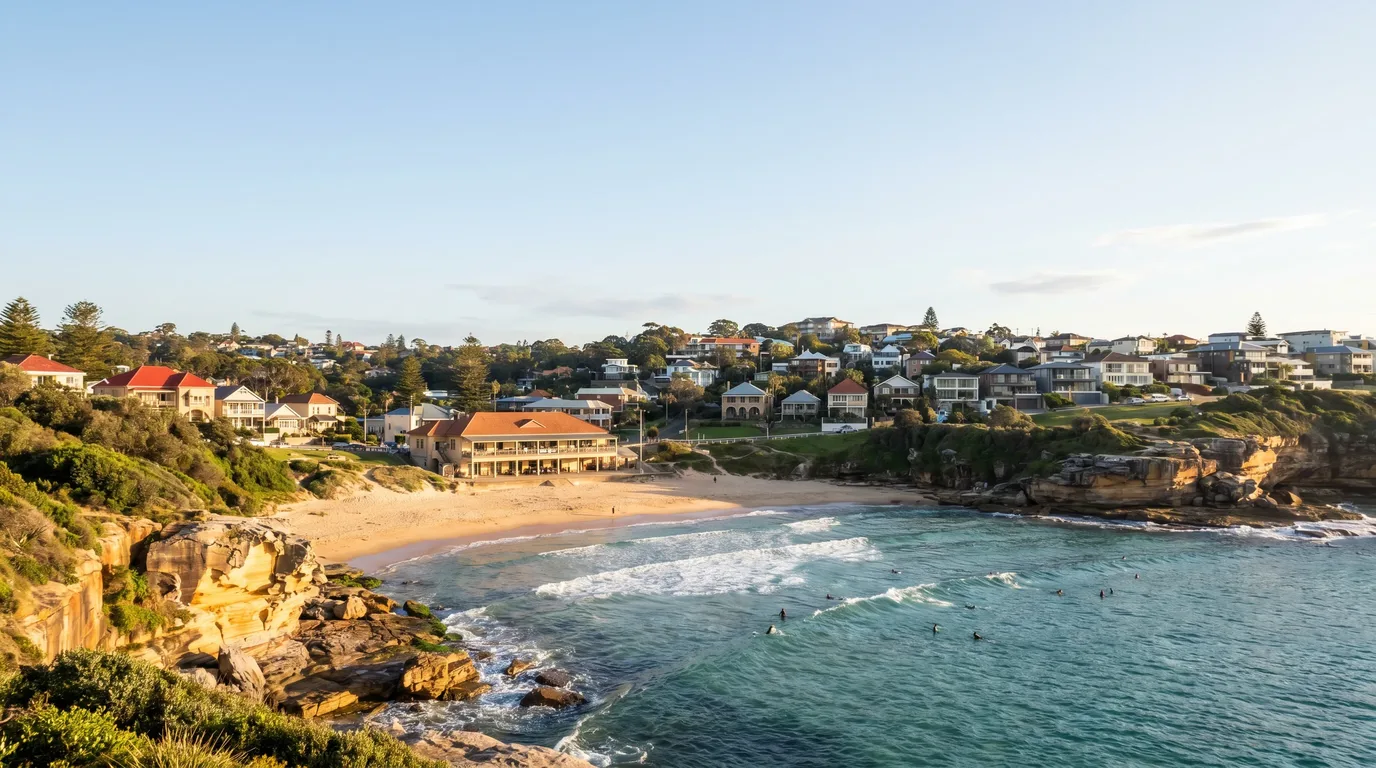
On Christmas Eve 1914, a 24-year-old Hawaiian swimmer named Duke Kahanamoku arrived at a beach north of Manly, shaped a board from a piece of sugar pine, and stood up in the surf in front of a crowd of onlookers who had never seen anything like it. The beach was Freshwater. What Kahanamoku demonstrated that day, sliding across the face of a wave standing upright, steering with his feet, was an entirely new way to be in the ocean. Australia had not seen surfboard riding before.
The board Duke shaped at Boomerang Camp is still held by the Freshwater Surf Club. A NSW Heritage Blue Plaque at the beach marks the event. And the annual Duke’s Day celebration on the beach continues the memory of a Christmas Eve that changed how an entire country relates to the ocean.
That history is worth knowing if you are moving to Freshwater, because it tells you something about the suburb that the real estate listings do not quite capture.
A village, not a suburb
Freshwater has the geography of a beach suburb. It sits just north of Manly and Queenscliff on a short strip of coast, with a beach at one end and the main road at the other. But it has the character of a village. The churn rate is low. The housing stock is a mix of original beach cottages, fibro and brick homes, and some newer apartments, and a meaningful portion of those properties have been in the same family for a long time. The streets near the beach are quiet in the way that only genuinely residential streets are, not performing peacefulness, just actually peaceful.
The official name was Harbord until 1998, when the place finally caught up to what everyone had been calling it for decades. That kind of casual informality, the place name winning out over the administrative one through sheer familiarity, tells you something about the way the suburb holds its identity.
Duke recognised it too. He described Freshwater as one of the best surfing beaches he had seen. The beach faces north-east, which gives it a reliable swell and keeps the morning light clean on the water. Over a century later the local surf club still honours that assessment, and on a good day it still looks exactly like what it is , the place where Australian surfing started.
What a long-held home means for a move
The low churn in Freshwater shows up in the kind of moves that happen here. They tend to be unhurried and careful, because people are often moving out of a home that has accumulated decades of life, good furniture, family things, fragile things that have been in the same spot for years and need to be carried properly. The opposite of a fast apartment move in the Manly CBD, where the goal is speed and the contents are often recent and replaceable.
A Freshwater move is more likely to involve a piano, a set of bookshelves that have lived in the same wall for twenty years, a dining table that came from someone’s parents, artwork with frames that can be damaged by a single bad corner on the staircase. These are not harder to move than corporate glass-and-steel pieces, but they call for a different attitude, deliberate, covered in blankets, protected at the corners, not rushed.
The access reality
The practical challenge in Freshwater is the beach-access streets. The streets running perpendicular to the beach, between Pittwater Road and the beachfront, can be narrow, with limited parking and no through-route. A full-size truck cannot always get a clean approach to the front door. The loading position is usually found back on a wider section of road, and the crew carries from there.
There is no removal-truck parking permit for the Freshwater beachfront or the surrounding streets. That is not unique to Freshwater, it is consistent across the Northern Beaches, but it means the timing and a scouted position do the work that a permit would do elsewhere. For a cottage near the beach, this is simply the way it is done: the truck stages back, the crew carries, and the job gets done at the pace the access requires.
Pittwater Road is the main artery. It runs north past Curl Curl to the upper beaches, and south to Manly and the Spit. Any Freshwater move heading toward the city eventually arrives at the Spit Bridge, the only southern road exit from the peninsula, and picks up the same published opening timetable that governs every truck run from this side of Sydney. For a move that is going to the CBD or the inner suburbs, timing the run around the Spit is the last piece of the planning.
What to tell your removalist
If you are moving from a beach-side cottage in Freshwater, the useful things to share when you get a quote are: the street address, a sense of how much you have (one-bedroom, whole house), whether there are stairs, and your preferred date and time. From the address, a removalist who knows the precinct will know whether the street is accessible or requires a staged load, and will pick the right truck size and crew number. For a long-held home with substantial contents, getting that assessment right before move day matters more than it does for a quick apartment turnover.
Freshwater is the kind of place people move to and stay. The way to move out of it, or into it, is to give it the same patience.
Get a quote for your Freshwater move. Tell us what you have and we will plan the access and the loading position before the day.
Common questions
Where did surfing first come to Australia?
At Freshwater Beach, on 24 December 1914. Duke Kahanamoku, the Hawaiian Olympic swimming champion who was visiting Australia for swimming exhibitions, fashioned a board from sugar pine at Boomerang Camp near the beach and gave the first surfing demonstration Australia had ever seen. A NSW Heritage Blue Plaque marks the event. The board he shaped is held by the Freshwater Surf Club.
Is it hard to move into or out of Freshwater?
The main practical challenge is the narrow beach-access streets and the limited beachfront parking. A full-size truck often cannot get a clean run to the door on the streets running perpendicular to the beach, so a loading position has to be scouted, typically on a wider section of road back from the beach frontage, with the carry done on foot. There is no removal-truck permit. Pittwater Road is the access artery north and south.
Why is Freshwater still called Freshwater if the official name was Harbord?
The suburb was officially named Harbord until 1998, when it was formally renamed Freshwater to match the name almost everyone had always used. The beach, the surf club and the neighbourhood had all been known as Freshwater for decades before the official change caught up.
Planning a move?
Get a free, no-obligation quote and we'll plan the access at both ends with you.
Get a quote